A practical playbook to track AI agent failures in production, triage incidents by impact, reduce recurrence, and improve release reliability over time.

César Miguelañez
Quick answer
If your goal is to make a practical decision quickly, use this guide to identify the right option for your context, compare trade-offs, and choose a next step you can implement today. This article is optimized for answer-style reading: direct guidance first, then supporting detail.
Decision snapshot
Best for: Teams solving this exact problem in real production workflows.
Main trade-off: Speed of implementation vs. depth/reliability over time.
Recommended next step: Use the checklist in this article to validate fit before rollout.
Slug
agent-failure-tracking-playbook-detect-triage-eliminate-recurring-production-incidents
Meta title
Agent Failure Tracking Playbook: Detect, Triage, and Eliminate Recurring Production Incidents
Meta keywords
agent failure tracking playbook, production incident triage, AI reliability operations, LLM failure recurrence reduction, AI observability workflow
Category
Artificial Intelligence
Body (plain-text source)
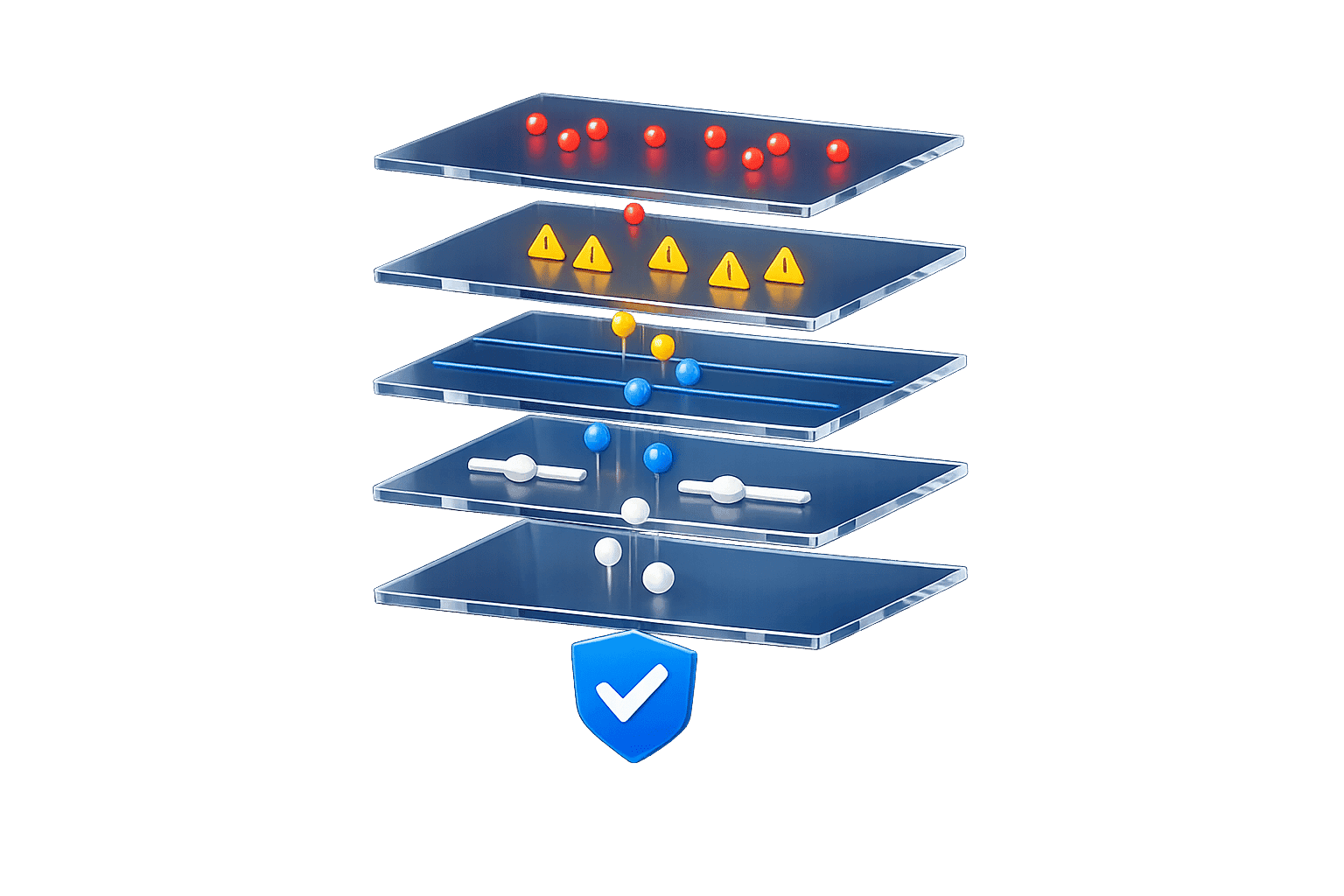
Tracking AI agent failures effectively requires a repeatable operating model. Without one, teams resolve incidents tactically but fail to reduce recurrence.
This playbook focuses on turning incident handling into a reliability improvement loop.
The failure tracking loop
Detect
Capture failures through behavior-aware alerts and quality signals.
Classify
Tag incidents by failure taxonomy, workflow impact, and severity.
Cluster
Group recurring incidents into actionable patterns.
Triage
Assign ownership and prioritize by user/business impact.
Fix
Apply targeted remediations in prompts, tools, retrieval, or policies.
Validate and prevent
Run regression checks and convert failures into durable eval cases.
Core failure taxonomy
CONTEXT_DRIFT
TOOL_CALL_FAILURE
TOOL_ARGUMENT_ERROR
GROUNDING_FAILURE
POLICY_BREACH
RELEASE_REGRESSION
Use a stable taxonomy to track trends over time.
Severity model
P0:
critical workflow outage
severe policy/safety incidents
P1:
recurring failures in core user journeys
P2:
low-impact anomalies for scheduled review
Severity discipline prevents noisy backlog growth.
Weekly cadence
Daily:
review P0/P1 incidents
verify active mitigations
Weekly:
analyze top recurring clusters
tune alert thresholds
add high-impact incidents to regression suites
Monthly:
audit recurrence metrics and ownership performance
retire low-value alerts/tests
KPI framework
mean time to detect (MTTD)
mean time to resolve (MTTR)
recurrence rate by failure class
pre-release catch rate from incident-derived evals
alert precision and triage throughput
These KPIs reveal whether failure tracking is reducing risk.
Common anti-patterns
no owner per failure class
no incident-to-eval conversion
no post-fix validation discipline
over-alerting low-impact anomalies
changing thresholds without root-cause review
Final takeaway
Failure tracking should not end at incident closure. The strongest teams convert failures into reusable prevention assets, reducing repeat incidents and increasing release confidence over time.
FAQ
What problem does this article solve?
It helps you choose the best approach for the topic in the title using practical, implementation-focused criteria.
Who should use this guidance?
Engineering, product, and AI/ML teams responsible for production quality, reliability, and release decisions.
What should I do first?
Start with the decision criteria and shortlist 1-2 options, then test with real production-like examples before broad rollout.
Related Blog Posts
LLM Observability: What It Is, Why It Matters, and How Teams Implement It
AI Agent Failure Modes in Production: Detection Playbook + Tooling Stack
AI Agent Failure Modes in Production: Detection Playbook + Tooling Stack
AI Agent Monitoring Playbook: Metrics, Alerts, and Reliability Operations for Production Teams