
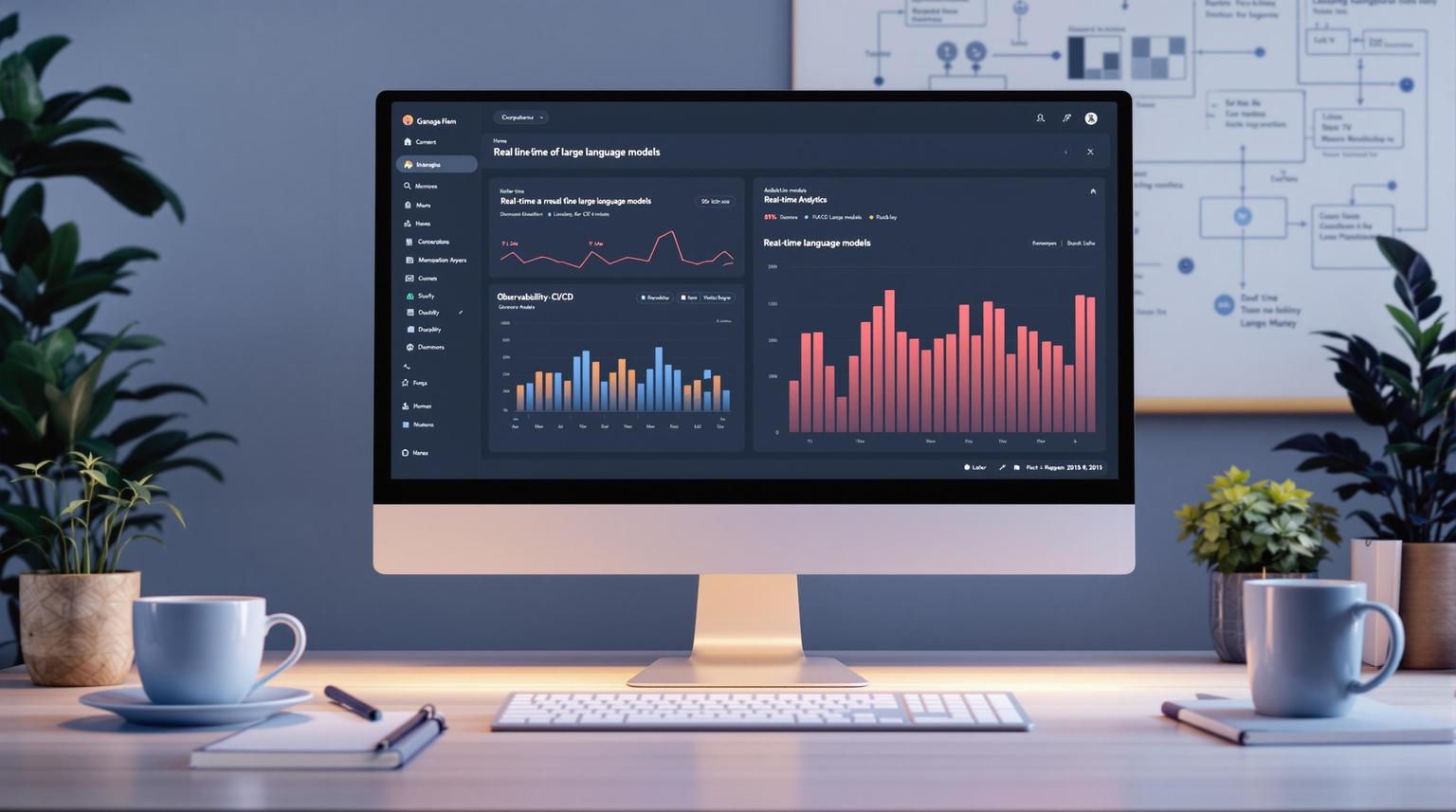
LLM observability is essential for ensuring large language models perform reliably in CI/CD workflows. It focuses on tracking metrics like response quality, speed, and cost to detect issues early and maintain high-quality production systems. Key practices include:
-
Tracking Metrics : Monitor performance (latency, throughput), quality (accuracy, consistency), resource usage, and safety.
-
Structured Logging : Log prompts, outputs, and processing steps to identify anomalies.
-
Automated Testing : Evaluate quality, performance, safety, and cost during CI/CD deployments.
-
Feedback Loops : Use user feedback, system metrics, and expert reviews to refine models over time.
Quick Overview:
| Challenge | Solution |
|---|---|
| Unpredictable Outputs | Advanced pattern analysis and baselines |
| Privacy Concerns | Filters and secure logging |
| Monitoring Complexity | Real-time dashboards and alerts |
By integrating these practices with tools like Latitude, teams can improve LLM performance and ensure smooth deployments.
LLM Monitoring & Observability
Challenges in LLM Observability
Complexity and Unpredictable Outputs
Large Language Models (LLMs) operate in ways that are hard to predict, making it challenging to monitor them effectively. Unlike traditional software systems, where inputs and outputs follow clear patterns, LLMs behave more like black boxes. This makes tracing data flow and setting up reliable monitoring baselines a tough task.
| Challenge Area | Impact on Observability | Monitoring Complexity |
|---|---|---|
| Output Consistency | Responses vary even with same prompts | High - Requires advanced pattern analysis |
| Performance Tracking | Response times can fluctuate | Medium - Needs metrics with broader ranges |
| Quality Assessment | Often needs human validation | High - Standard debugging tools fall short |
| Error Detection | Failure modes are complex | Very High - Traditional tools are inadequate |
On top of these technical hurdles, observability introduces serious privacy and security concerns.
Data Privacy and Security Concerns
Monitoring LLMs comes with the added risk of exposing sensitive data. When tracking outputs and logging system activities, there’s always a chance of data leakage. This makes privacy and security critical considerations for organizations.
Balancing thorough monitoring with strong privacy safeguards is no small feat. Some of the key challenges include:
-
Applying filters to protect sensitive information while still gathering useful data.
-
Staying compliant with data regulations while keeping logs secure and auditable.
Tools like Latitude can assist by offering structured environments for tasks like prompt engineering and monitoring. Tackling these issues is crucial for safely integrating observability into CI/CD pipelines.
Best Practices for LLM Observability
Tracking Key Metrics
Keeping an eye on the right metrics is crucial for ensuring LLMs operate smoothly and deliver value. These metrics cover both technical performance and business goals, helping maintain reliability throughout CI/CD pipelines.
| Metric Category | Key Indicators | Monitoring Priority |
|---|---|---|
| Performance | Response latency, throughput | High |
| Quality | Output accuracy, consistency | Critical |
| Resource Usage | Token consumption, API costs | Medium |
| Safety | Effectiveness of content filtering | High |
Logging and Monitoring Techniques
Structured logging and real-time monitoring are essential for identifying and resolving issues early. By logging prompts, outputs, and processing steps, teams can establish baselines and detect anomalies effectively.
Key elements of monitoring include:
-
Structured Logging : Record prompts, raw outputs, and post-processing details for better traceability.
-
Performance Baselines : Define normal operating ranges for key metrics to quickly spot irregularities.
-
Automated Alerts : Set up alerts to flag deviations in performance or quality metrics.
Tools like Latitude provide structured environments that simplify prompt engineering and monitoring, especially when managing multiple LLM features across various stages of deployment.
Using Feedback Loops
Feedback loops are a combination of user input, system data, and expert evaluations, all working together to refine LLM performance over time.
| Feedback Source | Purpose | Implementation Method |
|---|---|---|
| User Interactions | Assess quality | Collect direct user feedback |
| System Metrics | Optimize performance | Use automated monitoring |
| Expert Review | Ensure safety & compliance | Human-in-the-loop evaluation |
Analyzing feedback regularly helps teams uncover trends and make informed changes to models, prompts, or system architecture. These strategies are key to embedding observability seamlessly into CI/CD workflows, setting the stage for the next steps.
Integrating LLM Observability into CI/CD Pipelines
Automated Observability Testing
Automated observability testing evaluates how LLMs perform throughout the CI/CD lifecycle, helping identify potential issues before they reach production. This process ensures models are deployed reliably by maintaining continuous monitoring and evaluation.
Here are some key components of automated testing:
| Testing Component | Purpose | Implementation |
|---|---|---|
| Quality Metrics | Assess output accuracy | Compare results to benchmarks |
| Performance Checks | Track response times | Test for speed and efficiency |
| Safety Validation | Verify content filtering | Use automated screening tools |
| Cost Analysis | Monitor resource usage | Keep track of token consumption |
By implementing automated testing, teams can integrate observability seamlessly into CI/CD workflows using the right tools and platforms.
Tools and Platforms for Observability
Modern tools simplify LLM observability with features like real-time dashboards, version control, automated alerts, and team collaboration options. For instance, platforms like Latitude support prompt engineering and monitoring, making it easier to manage production-level LLMs.
Key platform features include:
| Feature | Function | Benefit |
|---|---|---|
| Real-time Dashboards | Track live metrics | Quickly detect issues |
| Version Control | Log model changes | Ensure reproducible deployments |
| Collaboration Tools | Facilitate team coordination | Create smoother workflows |
| Integration Support | Connect with existing systems | Centralize monitoring efforts |
Improving Systems with Observability Data
Data gathered from observability tools can lead to major system improvements in performance, security, and efficiency. Teams can use this data to optimize response times, fine-tune prompts, and adjust configurations. It also helps identify bottlenecks, improve content filtering, and strengthen privacy protections.
These insights allow organizations to consistently enhance LLM deployments while staying adaptable to evolving needs and user demands.
Conclusion and Future Trends
Key Points Summary
LLM observability in CI/CD pipelines is becoming a cornerstone for reliable monitoring, maintaining performance, and ensuring data protection. By incorporating observability practices, organizations are reshaping how they manage and refine their AI systems.
Here are two critical factors for success:
| Factor | Implementation | Impact |
|---|---|---|
| Feedback Loops | Data-driven improvement cycles | Boosts model performance |
| Automated Testing | Tied to CI/CD pipelines | Ensures consistent quality |
Future Developments
The future of LLM observability is being influenced by new tools and approaches. AI-powered observability solutions are now helping teams identify and resolve production issues more effectively.
Key trends shaping the field include:
| Trend | Description | Impact |
|---|---|---|
| Advanced Automation | AI tools reduce manual involvement | Speeds up issue detection in CI/CD |
| Integrated Security | Built-in privacy and compliance features | Strengthens data protection |
| Collaborative Platforms | Tools for engineers and experts to work together | Simplifies workflows |
These trends are enhancing existing practices, such as automated testing and feedback loops, within CI/CD pipelines. For example, automation tools are reducing the need for manual effort, while integrated security features are streamlining privacy checks during deployments.
As LLMOps continues to evolve, organizations have fresh opportunities to refine their AI systems. Staying updated on these trends and adjusting observability strategies will be key to navigating the ever-changing AI landscape.
FAQs
How to debug a CICD pipeline?
| Debug Phase | Key Actions | Tools/Methods |
|---|---|---|
| Initial Verification | Check syntax and naming | Built-in CI/CD linters |
| Dependencies Check | Validate versions, compatibility | Dependency graphs |
| Performance Analysis | Measure response times, token usage | Prometheus, Grafana |
| Root Cause Investigation | Analyze error patterns, behaviors | Log analysis tools |
Here are some strategies to debug LLM observability pipelines effectively:
1. Automated Testing
Utilize tools like Jenkins or GitHub Actions to catch performance bottlenecks and inconsistencies early in the process.
2. Monitoring for Debugging
Focus on error-specific dashboards and anomaly detection. These can help identify security vulnerabilities and performance issues in production systems.
3. Root Cause Analysis
Apply Root Cause Analysis to identify problems in failed jobs. This is especially important for LLMs, where challenges often stem from performance, data quality, or configuration issues.
Best practices for debugging:
-
Test job outputs locally before deployment to troubleshoot quickly.
-
Use detailed logging to capture metrics specifically for debugging.
-
Rely on dependency graphs to pinpoint environment-related problems.
-
Set up anomaly detection tailored to LLM performance trends.