AI agent observability for CTOs: what it is, how it differs from traditional monitoring, and what to look for when selecting a platform for production AI.

César Miguelañez
By Latitude · April 9, 2026
Key Takeaways
AI failures are invisible in standard logs. A 200 response with a hallucinated answer looks identical to a correct one. Observability requires purpose-built tooling.
The strategic risk of shipping AI without observability is not just quality — it's losing the ability to improve systematically. Teams that can't see failure patterns can't fix them at scale.
Agent observability differs from LLM monitoring: agents compound errors across turns, and a failure in step 2 can corrupt everything downstream without triggering any alerts.
The right platform connects issue discovery, human annotation, and eval generation in a single workflow — not three separate tools.
Build vs. buy: internal tooling can handle logging. It can't handle issue clustering, eval generation, and quality tracking without significant investment that compounds maintenance overhead over time.
Most engineering organizations shipping AI follow the same trajectory: move fast, get to production, monitor with existing tools. The problem surfaces 3–6 months in. Users are complaining about outputs that look fine in logs. Quality seems to have degraded after a model update but nobody can prove it. The team is spending increasing cycles on reactive debugging rather than shipping features.
This is the observability gap. It's not a failure of effort — it's a structural mismatch between the tools available for AI monitoring and the nature of AI failures. This guide is written for CTOs who are at or approaching that inflection point.
Why Traditional Monitoring Falls Short for AI
Traditional application monitoring is built around two questions: did the system respond, and did it error? For AI systems, these questions are necessary but deeply insufficient.
An AI agent that returns a 200 response in 800ms has "passed" every traditional monitoring check. It may also have:
Hallucinated a policy that doesn't exist and stated it confidently to a customer
Called the wrong tool and built 4 subsequent turns of reasoning on a wrong premise
Lost track of a constraint the user established in turn 2 and violated it in turn 9
Given a subtly inconsistent answer that, combined with a previous session, creates a misleading picture
None of these appear in error logs. None trigger uptime alerts. None are visible in cost and latency dashboards. They are semantically meaningful failures in systems that traditional monitoring was never designed to detect.
The Compounding Problem in Agents
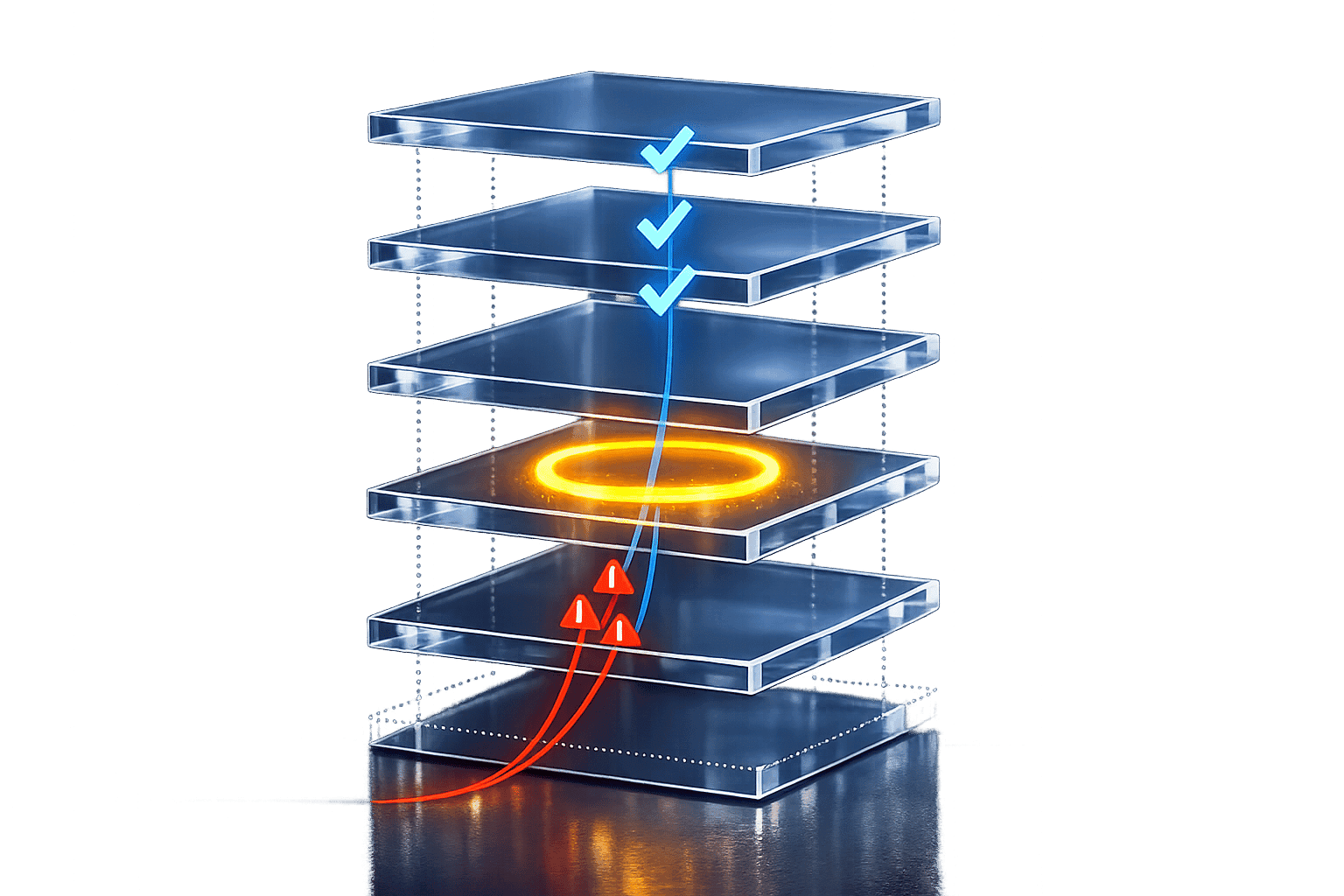
Single LLM call failures are bad. Agent failures are structurally worse because they compound. An AI agent making a sequence of decisions is vulnerable to a class of failure that doesn't exist in traditional software: a wrong inference at step 2 becoming a wrong assumption at step 3 becoming a wrong conclusion at step 7 — all without any individual step producing an error.
This means the failure mode isn't visible at the step level. It's only visible at the session level, which requires tracing the entire session as a connected unit — not a collection of individual LLM calls.
What AI Observability Actually Means in Practice
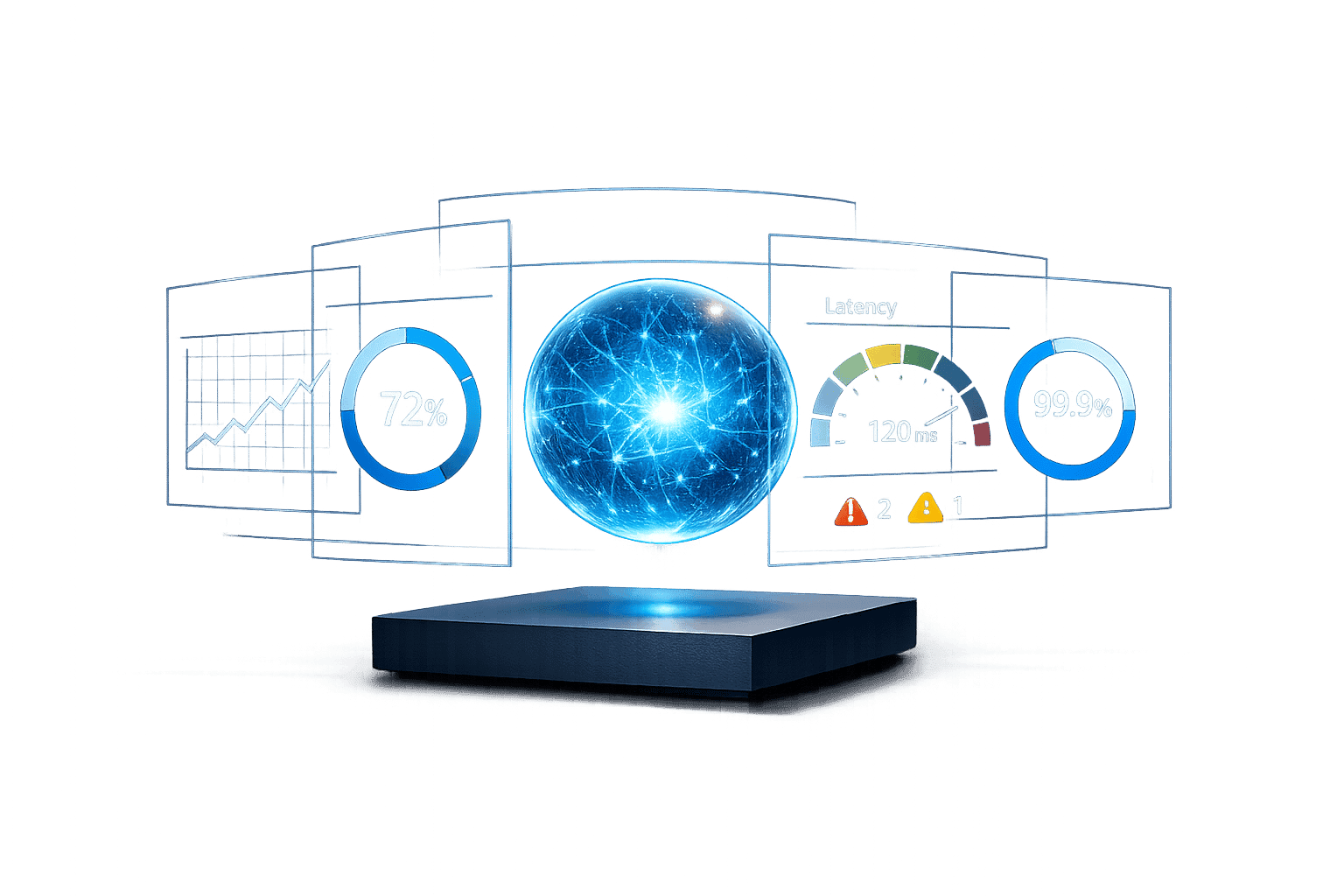
AI observability, done right, answers questions that traditional monitoring cannot:
What are the most common ways my AI is failing right now? Not "what errors occurred" but "what failure patterns are most frequent and impactful."
Which traces are most likely to contain failures worth investigating? Not random sampling, but anomaly-prioritized surfacing.
Are we improving? Not "did the deploy succeed" but "did this change actually reduce the rate of this failure mode."
Are we regressing? Did a model update, prompt change, or new feature cause quality to drop on dimensions that were previously stable?
Answering these questions requires a stack that goes beyond logging: issue clustering, human annotation workflows, evaluation pipelines, and regression tracking — all connected so that production observations flow into improvement actions.
The Strategic Risk of Shipping AI Without Observability
The immediate risk of no observability is reactive quality management: you find out about failures when users complain. The longer-term strategic risk is more serious.
You lose the ability to improve systematically. Improving AI quality requires a closed loop: observe what's failing → understand the pattern → fix it → confirm the fix worked → ensure it doesn't regress. Without observability, this loop is broken at step one. Teams that can't see failure patterns can't fix them at scale — they can only respond to incidents after users have already been impacted.
Model updates become high-risk events. Every time a model provider updates their model, or your team changes a prompt, the risk of silent quality regression is real. Without a baseline and a way to measure against it, "did this change make things better or worse" becomes unanswerable except through user feedback, which lags by days or weeks.
The eval suite never catches up with production reality. Teams that rely on manually authored synthetic evals find that their test suite doesn't reflect the failure modes that actually appear in production. Passing evals and failing users coexist until someone builds the loop that connects production observations to pre-deployment tests — which, without purpose-built tooling, is significant engineering work.
What to Look for in an AI Observability Platform
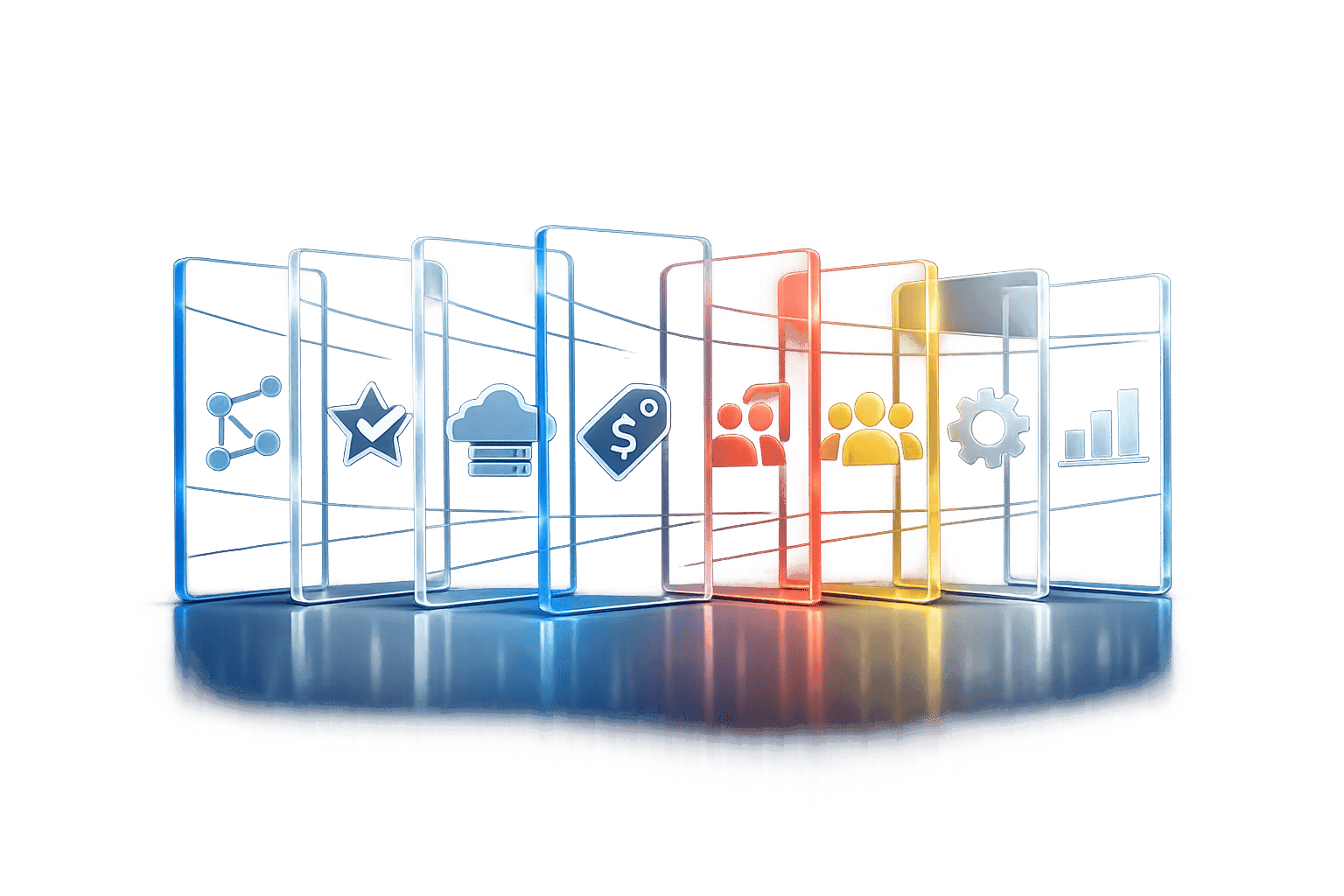
When evaluating platforms, these five capabilities distinguish production-ready AI observability from sophisticated logging:
1. Issue discovery, not just logs
Logs tell you what happened. Issue discovery tells you what patterns are happening — which failure modes recur, how frequently, and with what severity. You want a platform that clusters traces into named failure modes and tracks each one end-to-end from first sighting through resolution. Without this, your observability is a fire hose with no filter.
2. Full session tracing for agents
For agent workflows, individual LLM call traces are insufficient. You need session-level tracing that captures every turn, every tool call, every state change — connected by a session identifier — so you can see what the agent did across the full interaction. Platforms that instrument individual LLM calls but don't connect them into sessions will miss the failure modes that only manifest across multiple turns.
3. Human annotation workflows
Automated quality metrics can't capture everything. There are quality dimensions specific to your product that only domain experts can assess — whether a response was accurate for your use case, whether the agent made the right escalation decision, whether the tone was appropriate for your brand context. The platform should provide annotation queues that surface the right traces for domain expert review, not just raw trace lists.
4. Eval generation from production issues
The most valuable capability for long-term quality management: the ability to convert observed production failure modes into evaluations that run pre-deployment. Every failure mode that's been observed and annotated should produce a corresponding test. This is what closes the loop between production observation and deployment confidence.
5. Eval quality measurement
Evals that don't correlate with human judgment are worse than no evals — they give false confidence. Look for a platform that measures eval quality (alignment with human annotations) over time and surfaces which evaluators are reliable versus which need refinement.
Build vs. Buy
The build vs. buy question comes up for most engineering teams with strong internal tooling capability. The honest answer:
Internal tooling handles logging well. If you have a mature observability stack (Datadog, OpenTelemetry, whatever), adding LLM call logging on top of it is not expensive. You'll get cost, latency, and error monitoring for a few weeks of effort.
Internal tooling struggles with everything above logging. Issue clustering requires ML infrastructure. Annotation queue management requires workflow tooling. Eval generation from annotated data (GEPA-style) is a non-trivial algorithm. Eval quality tracking requires ongoing recalculation and a data model that connects annotations, evals, and issues. Building all of this internally, and maintaining it as the product evolves, is a significant ongoing cost — one that grows as your production AI usage scales.
The teams that have tried to build internally consistently report the same pattern: the logging layer is easy; the layer above it (issue discovery → annotation → eval generation → quality tracking) takes 6–12 months of engineering investment to get right, and requires continuous maintenance that competes with feature shipping.
The Reliability Loop
The most effective framing for AI observability in a production engineering org is the reliability loop:
Observe — production traces flow into the platform, capturing every interaction
Annotate — domain experts review anomaly-prioritized traces and classify failure modes
Track — failure modes are tracked as issues with lifecycle states (open → in progress → resolved → verified)
Evaluate — GEPA converts annotated failure modes into evaluations that run in CI
Iterate — eval results block regressions, and the cycle restarts with new production data
This loop is what separates teams that improve AI quality systematically from teams that firefight it reactively. The difference in outcomes over 6–12 months is significant: teams running this loop see measurable reductions in failure rates; teams without it spend the same time debugging the same categories of failures repeatedly.
Frequently Asked Questions
What is AI agent observability and why does it matter for CTOs?
AI agent observability is the ability to understand what your production AI is doing, why it fails, and how to prevent those failures from recurring. For CTOs, it matters because AI systems fail differently from traditional software: failures are probabilistic, often invisible in standard logs, and compound across multi-turn interactions in ways that standard monitoring tools weren't built to detect. Without observability, AI quality management is reactive — you find out about failures when users complain, not before they're affected. With observability, failure modes surface before they reach users, and teams can systematically improve AI reliability rather than firefighting individual incidents.
How is AI observability different from traditional application monitoring?
Traditional application monitoring answers: did the system return a response, how fast, and did it error? These are binary, deterministic questions. AI observability must answer: was the response correct, was it aligned with what the user needed, did it violate any safety or quality constraints, and is the pattern that caused this failure going to recur? These are probabilistic, semantic questions that require different tooling. Specifically: (1) Failures aren't errors — a 200 response with a hallucinated answer looks identical to a correct answer in standard logs. (2) Agent failures compound across turns — a wrong assumption in turn 2 can cause every subsequent turn to be wrong. (3) Quality degrades gradually — small prompt changes can cause slow drift in output quality that standard uptime monitoring never surfaces.
What should a CTO look for in an AI observability platform?
Five capabilities matter most for production AI teams: (1) Issue discovery — not just logging, but automatic surfacing of failure patterns with frequency and severity. (2) Multi-turn and agent support — full session tracing that connects every turn and tool call into a coherent trace, not just individual LLM call logs. (3) Human-in-the-loop annotation — workflows that let domain experts define what "good" means for your specific product. (4) Eval generation from production issues — the ability to turn observed failure modes into pre-deployment test cases automatically. (5) Eval quality tracking — a metric that measures whether your evaluations are actually aligned with human judgment over time.
Next Steps
Latitude is built around the reliability loop — issue discovery, annotation queues, GEPA eval generation, and quality tracking in a single platform. The free plan includes enough traces and scans to validate the workflow before committing. Start for free → or request a demo for enterprise evaluation →